Special feature of the seasons which is drew our from the production of Sguar cane
== The railway network being spread out in the island, and old overloading trucks ==

[The last renewal of this page: October 25, 2013]
Fiji is a tourist destination, and there are not many industries for which we can call "industry", however, ont outstanding activity is a prduction of sugar cane.
Anywhere you go on the island, you'll see sugar cane there. We can even say that the whole island is a sugar cane farm.
It is a swidden agriculture, and after the harvesting, they only burn the field, and then it seems that they can start to plant and let them grow easily for the next season without special cares.
All the harvested sugar cane is transported to the refineries in Lautoka or Rakiraki to get sugar, and the sugar is exported to EUs. (Historically, England that dominated Fiji under colonial rule grew this industry, and used to monopolize the import.)
There are two ways to transport the sugar cane from the farms being spread out in the island to Lautoka and Rakiraki. One is an exclusive railway, and the other one is a truck.
Both ways are producing a special feature of the seasons during its harvesting season (Mainly from July to October).
We can see a scene only to be seen in Fiji.
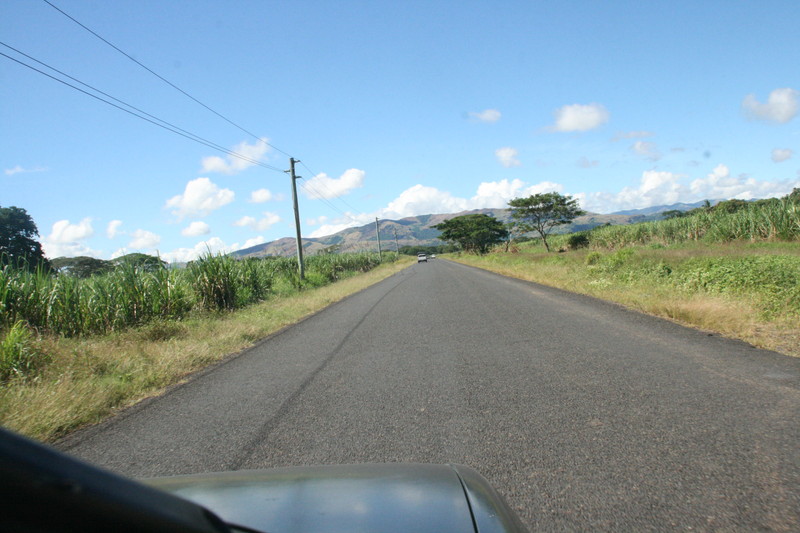
Anywhere you go in the island, the sugar cane farms are spread out.
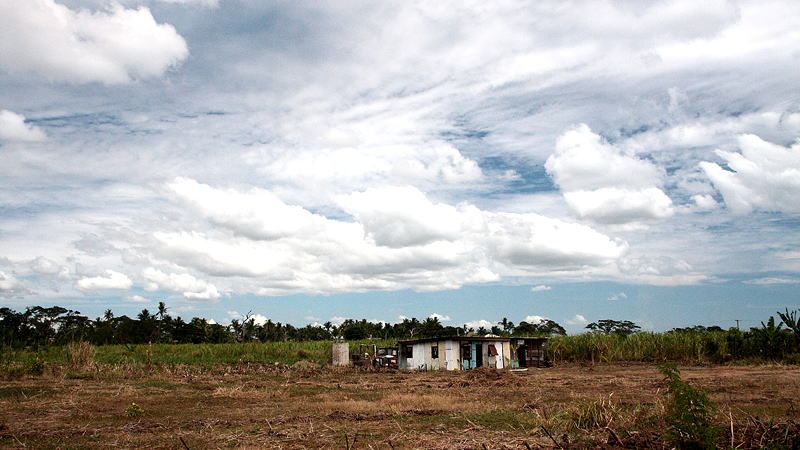
A house of a farmer of sugar cane. The field in front has been harvested already.
As I was taking this picture, a young man came out to see me from the huose, and let me know about sugar cane.
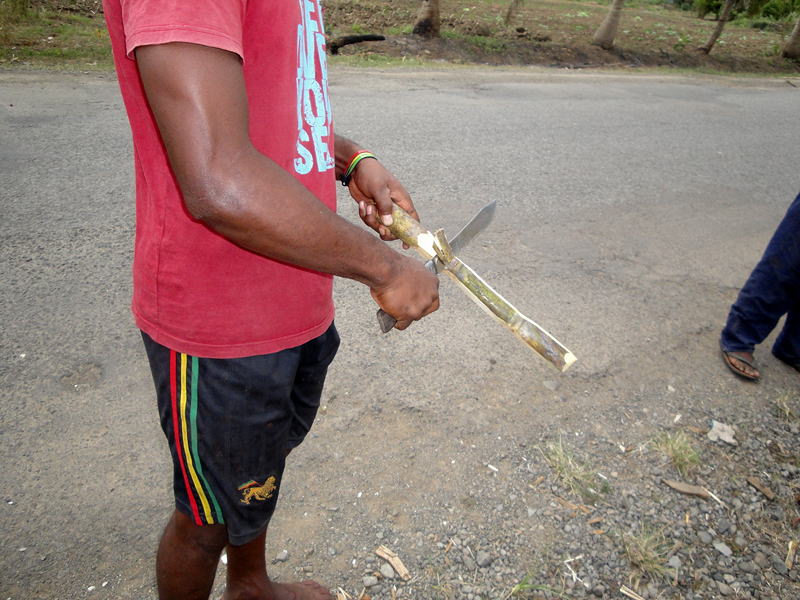
As I told hime that I have never tried sugar cane, he jumped to the farm to get me a piece of sugar cane.
He told me at his home, sometimes the breafast is only a piece of sugar cane.
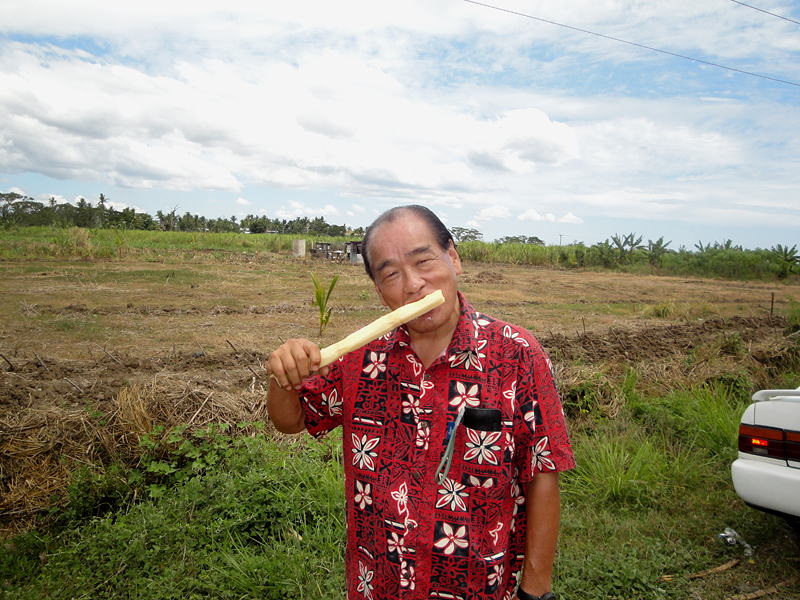
It was a surpising to know its sweetness!
Bitting it with my mouth, I can tell that it is a sugar itself!
A sugar cane is a hard fibrous plant, but when I bit it, I felt the a biting sensation like sugar powder, and then ultra sweet juice spread out in the mouth.
I learned that there is no doubt that we can get sugar from this.
By the way, it is said 0.5 ton of sugar is refined from 1 ton of the sugar cane. it is amazing.
Well, how this sugar cane is transported after the harvesting?
This borns Fiji's special features of the seasons.
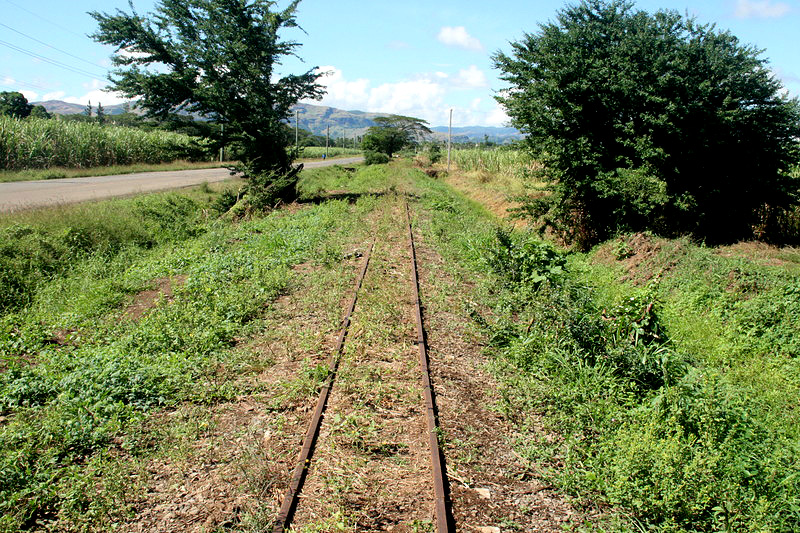
The great network of railways covers all the flat area of the island for exclusive transport trains.
However, it is only used during the harvesting season, which is from July to October, the most of the year the railways were covered with mud and grasses, so that no body could believe that there could go the trains later.
This picture shows the on which is still a good condition. In many plaecs, they are buried under the mud and grasses are growing on it.
The gauge is very narrow like a toy train's rails in an amusement park.
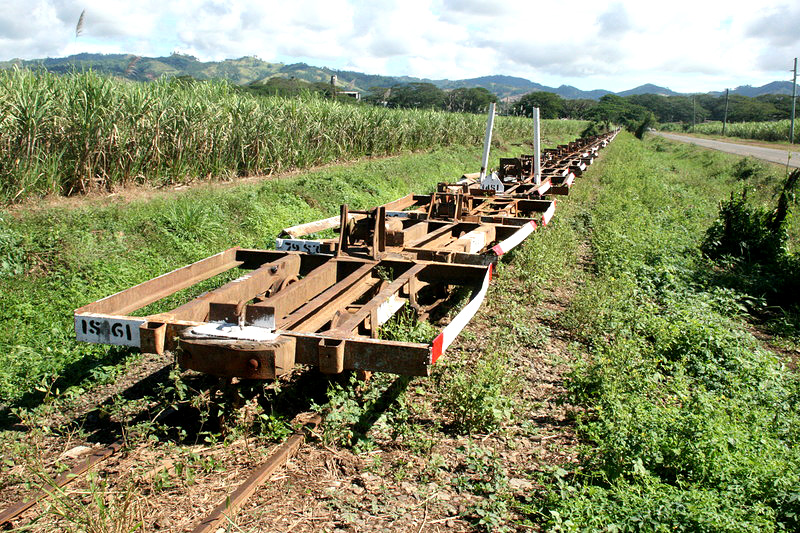
We can find trollies for sugar cane being left here and there in off seasons.
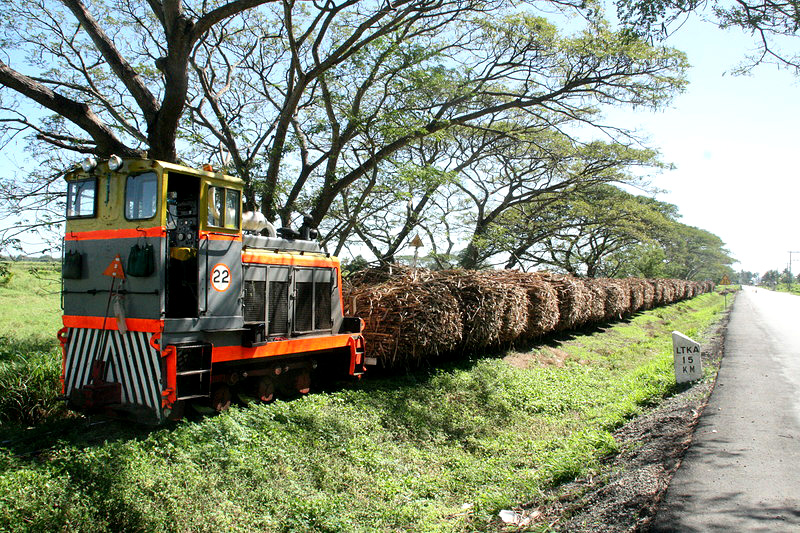
Once the harvesting season comes, thing is like this!
More than 100 trollies are pulled by a Diesel engine and go.
Its speed is very slow, not much different from the speed of a human's walking.
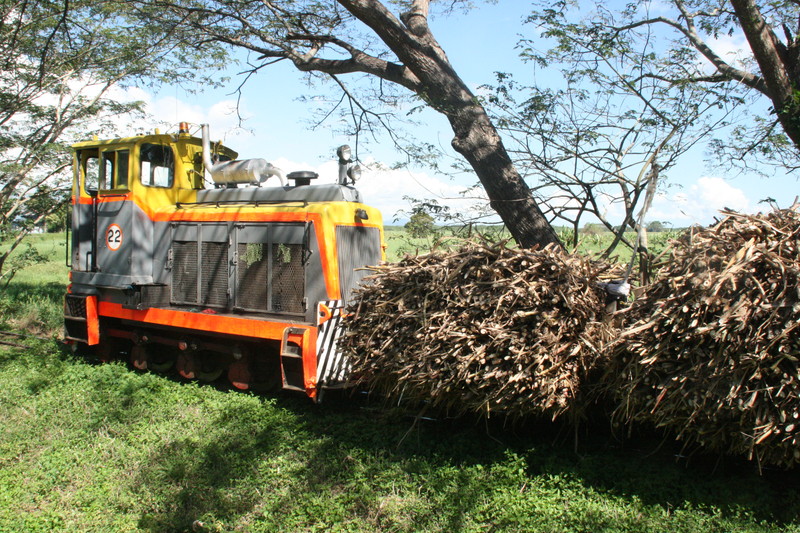
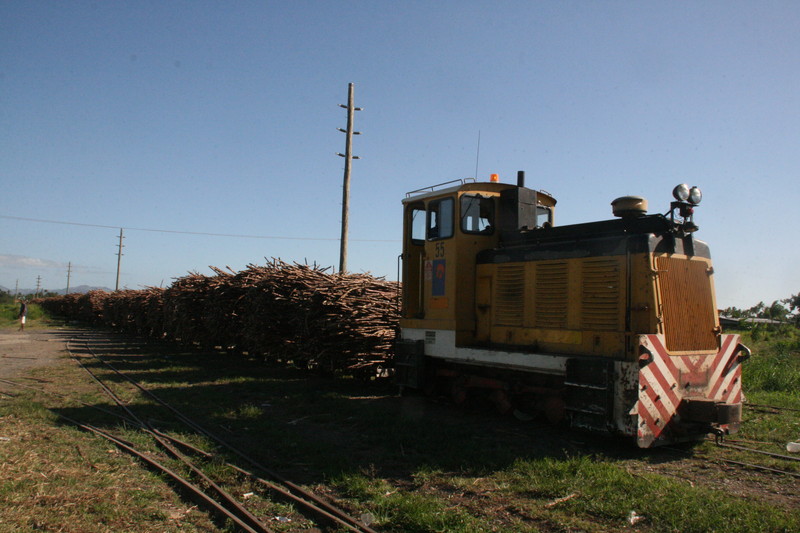
This one had more than 100 trollies.
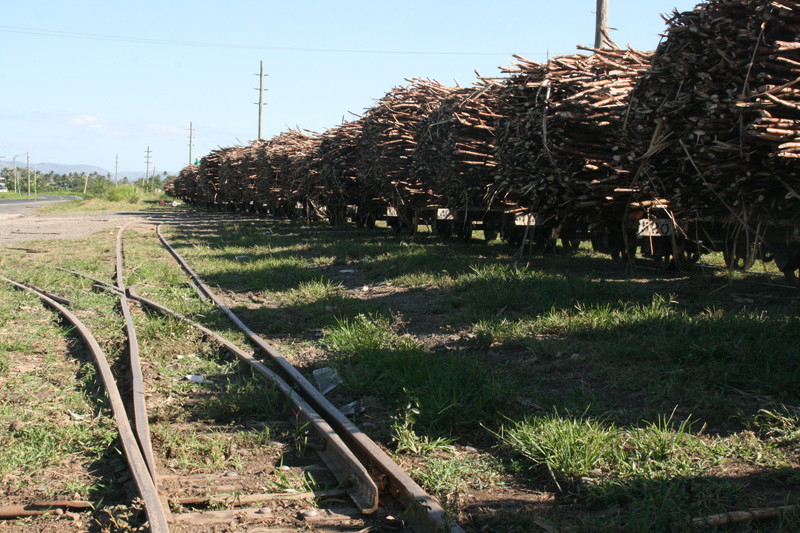
The network spreads into deep in the island, therefore there are many point switches.
Of course, they are oeprated manually, and there are no traffic signals. So the train goes very slowly with an visual confirmation, and operating them one by one.
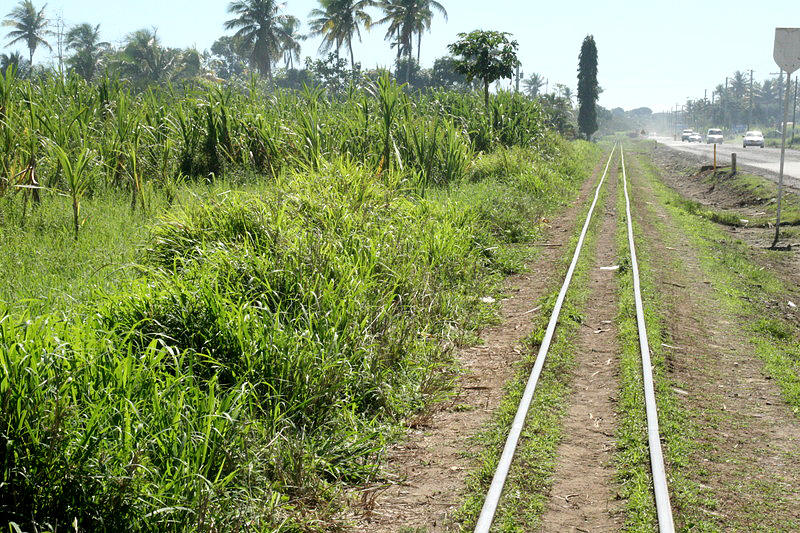
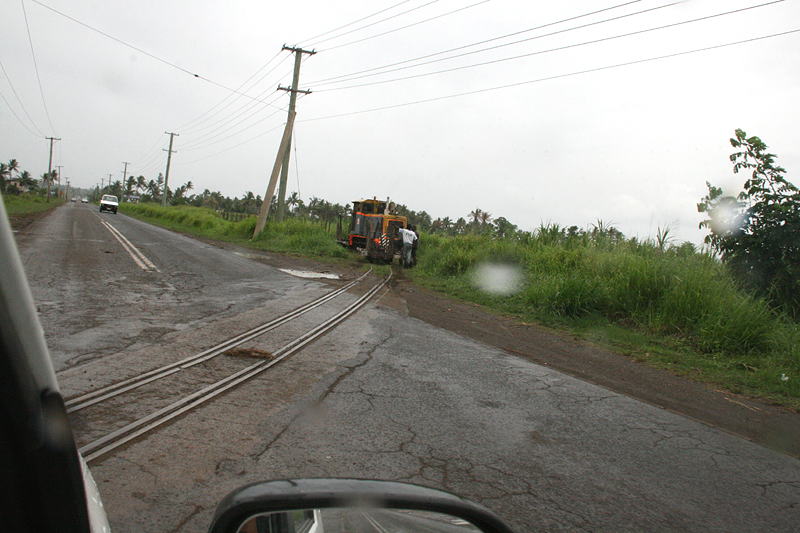
This railway network crosses main streets and small roads in may placese. However, there are no traffic signals nor particular raiload clrossings. Trains just come in honking a super loud horn continuously from far before the point.
It is a big fear while driving at night to face to the train crossing the street pulling a long trollies more than 100 in a dark, as there are no streetlights nor lights from the private houses around.
If an accident happens, the vehicle that did not stop is always guilty. The sugar cane production which is the major industry of this country has advantage to anything else.
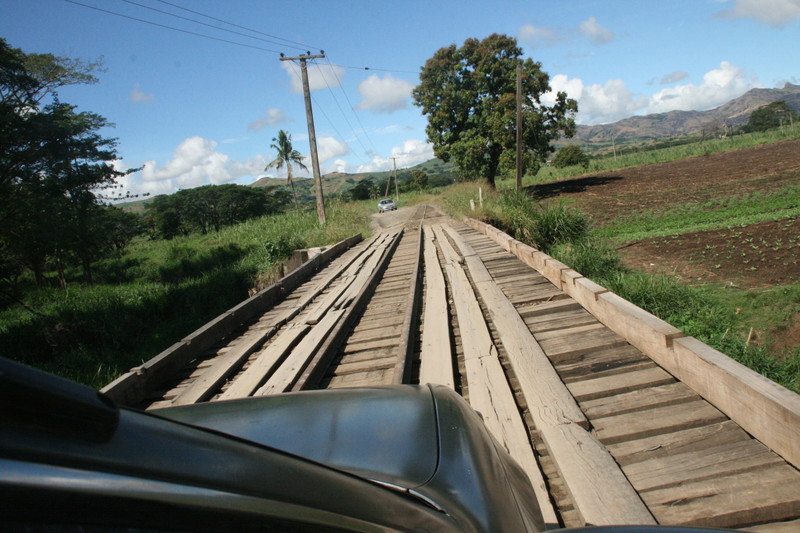
Here is an inland of the island. The bridge which across the river is used in common with a train!
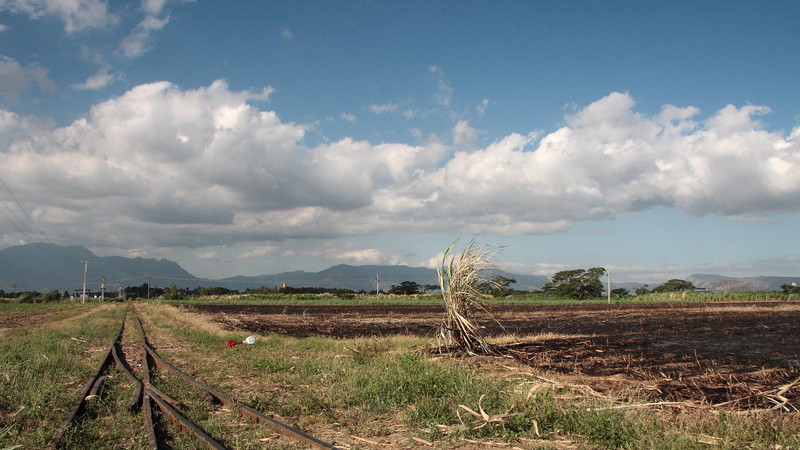
Rails are very slipshod, and there are no straight rails in acurate.
They are bent all the way, and I can't stop worrying if the train would derail or not.

This is one of two refineries in Viti Levu island, lcoated in Lautoka which is the largest one.
All the sugar canes harvested in southern area of the island are transported to here.
This is the destination of the cargo railways, the network of which is spread out in this island.
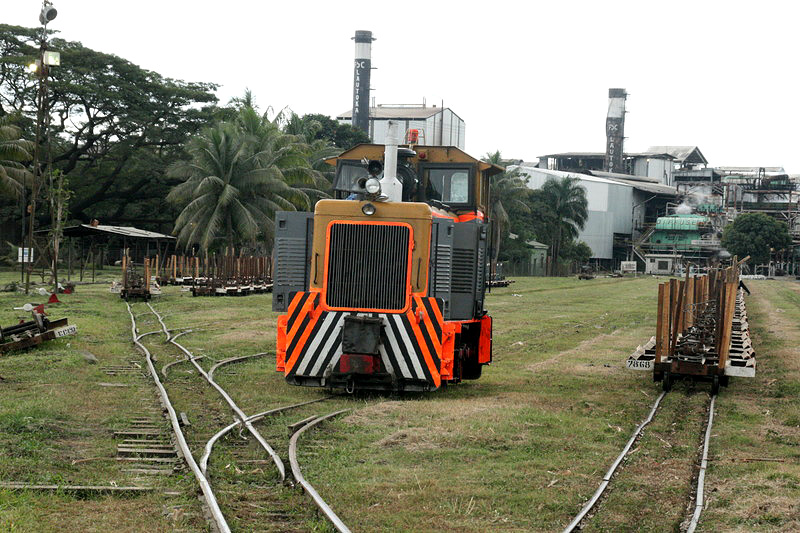
Even considering special circumstance, this distortion of the rails are.....Hard to believe, isn't it?
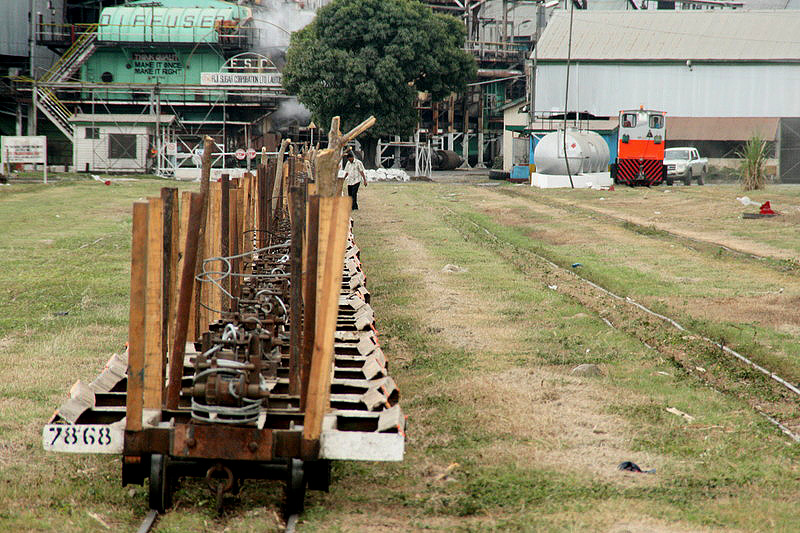
The last line is coming into the refinery directly.
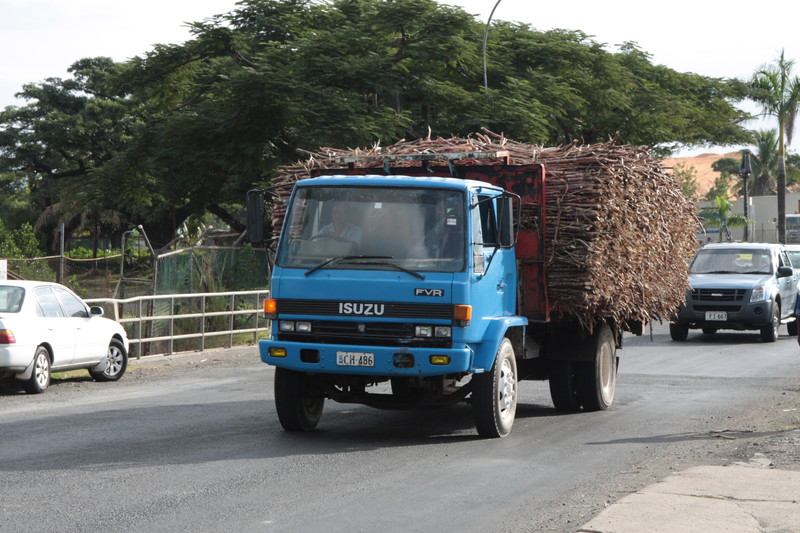
Well, another transportation method, which is also a special feature of seasons is a truck.
Super old junk trucks run on the street with a oversized wide load of sugar cane ahead of refinery in Lautoka (In some area of north of the island is for Rakiraki) in an ultra slow speed.
During the harvest season, numberless trucks are going, so that even if we take over the trucks again and again, there goes another truck ahead.
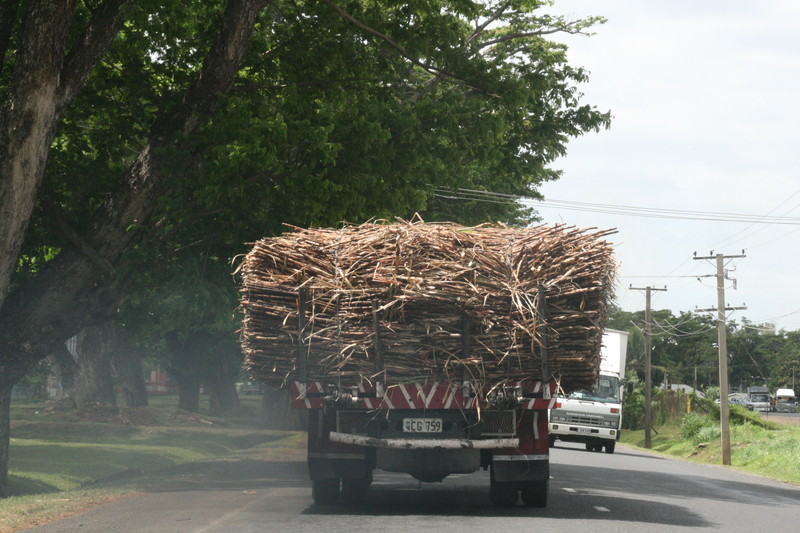
Trucks to transport sugar cane which runs extremely slowly (As the trucks are so old and mess, they can't go fast) exhausitng balck smoke are the worst obstruction of traffic, however, they should have a priority as they are supporting the most important indsutry of this country.
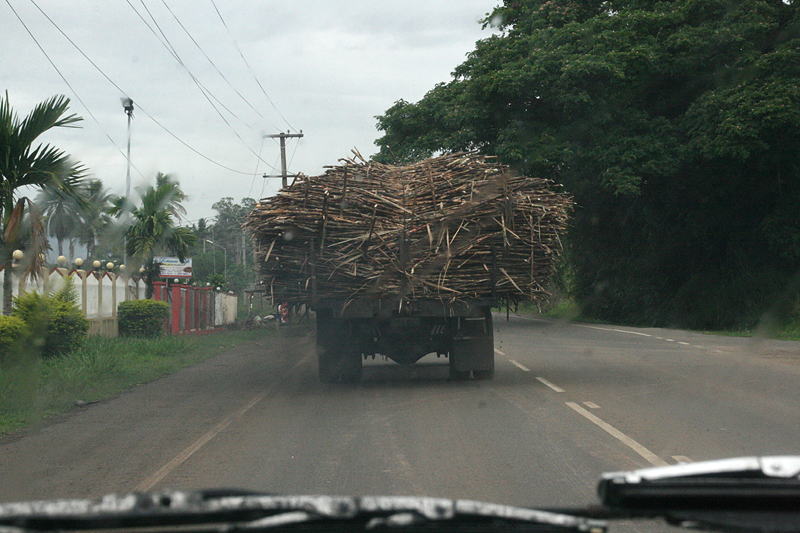
Even in a little hill climbing, there are trucks going(moving?) slower than human walking.
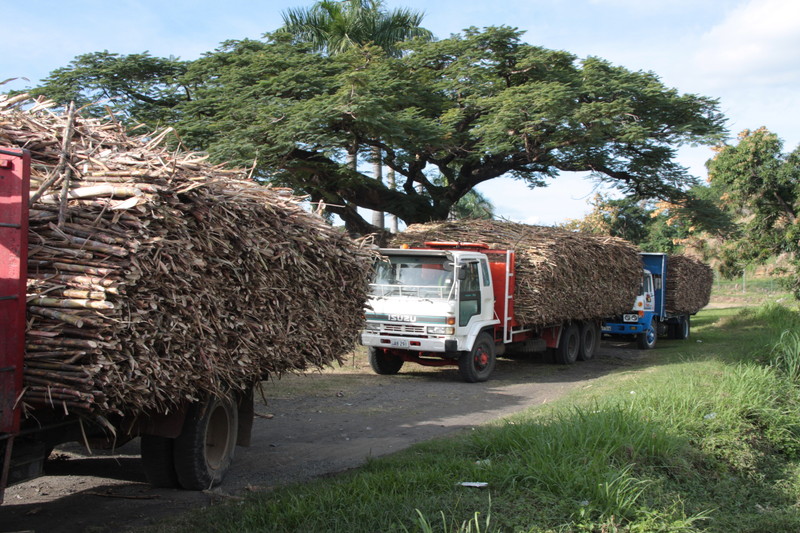
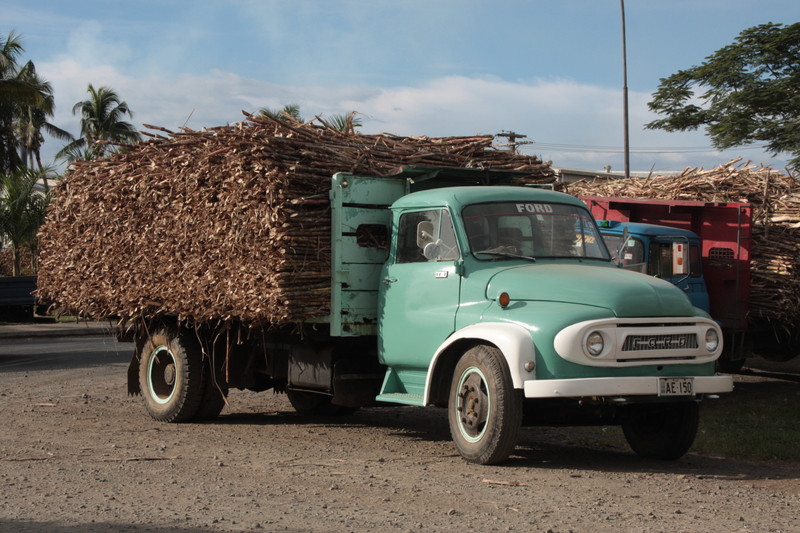
Even the trucks manufactured forty or fifty years ago are taking a lively part.
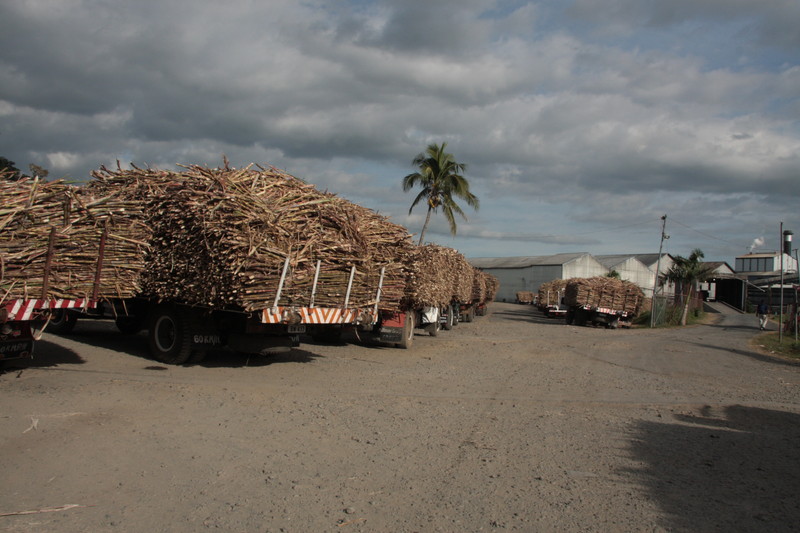
Trucks being gathered at the sugar refinery in Lautoka. They are waiting for unloading.
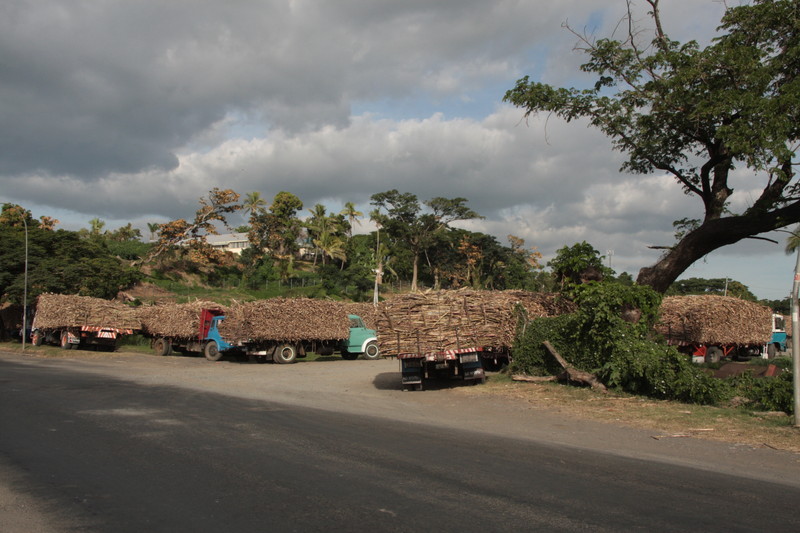
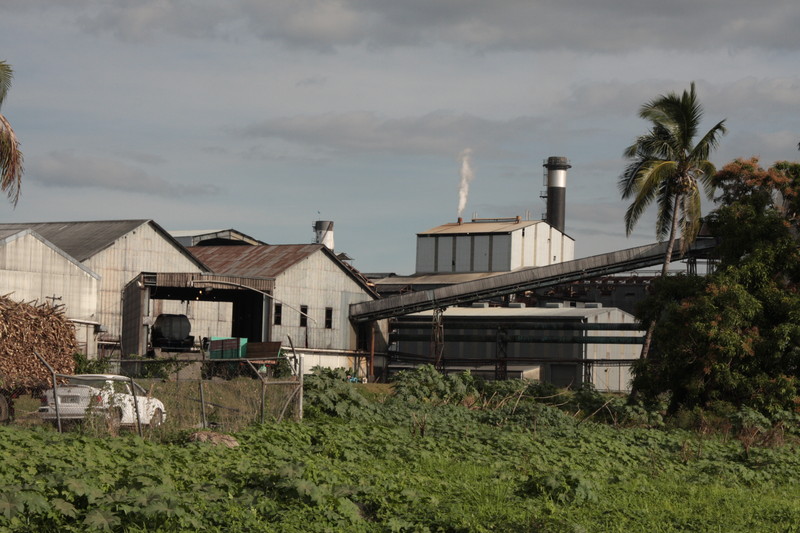
Other than refineries in Lautoka and Rakiraki, there is a big refinery in Lambasa in Vauna Levu island.
They all are producting the largest amount of exporting product of Fiji.
 In case you hit this
page directly from a Search Engine, you can reach to all of the pages of MAFNET from Top Page
In case you hit this
page directly from a Search Engine, you can reach to all of the pages of MAFNET from Top Page